How to Track a Multi-Chain Crypto Portfolio in One Place
Bitcoin, Ethereum and Solana wallets each speak a different language. Here is how to see every holding in one dashboard without handing over keys.
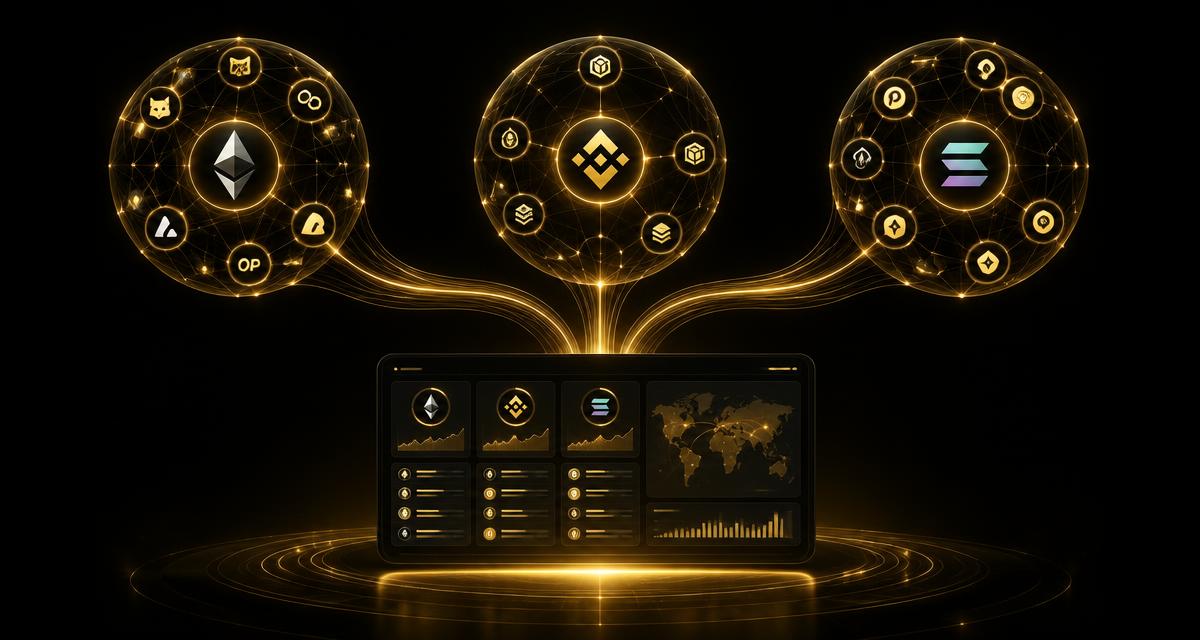
Most long-term holders end up spread across several blockchains: Bitcoin in a hardware wallet, gold and stablecoins on Ethereum, a few Solana tokens in a mobile wallet, maybe tokenized stocks somewhere else. Each chain has its own explorer and its own app, and none of them shows the whole picture.
Why one view matters
You cannot rebalance what you cannot see. If your Bitcoin share has quietly grown from 40% to 55%, you only notice when every wallet is added up in one place, priced in the same currency, at the same moment.
The safe way: public addresses only
A tracker only needs your public address for each chain. That address lets it read balances from the blockchain. It cannot move funds.
- Bitcoin: an address starting with bc1, 3 or 1, or an xpub for the whole wallet
- Ethereum and EVM chains: an address starting with 0x
- Solana: a base58 address from Phantom, Solflare or similar
Never type a seed phrase or private key into any tracker. No legitimate portfolio tool needs it.
Tokens that hide inside other tokens
Lending platforms often give you a receipt token instead of the original asset. Supplying WBTC to a money market may show up as a token named spWBTC or kWBTC. A good tracker maps these receipts back to the underlying asset so your Bitcoin exposure is counted correctly.
Mixing synced and manual holdings
Not everything lives on-chain. Exchange balances, cold storage you would rather not link, or assets on unsupported chains can be entered manually. Keep synced and manual rows clearly labelled so you always know which numbers update themselves.
A simple routine
- Add one public address per wallet and give each a clear name.
- Let the tracker sync hourly.
- Review allocations once a month, alongside your DCA contribution.
Key takeaway
One dashboard, public addresses only, receipts mapped to their real assets. That is all you need to track a multi-chain portfolio safely.
Put this into practice
Track your wallets, set target allocations and log your DCA — free, using public addresses only.
Start tracking free